Types of Auto TPMS Location Systems
April 16, 2026
Take the guesswork out of advanced TPMS systems with a clear understanding of High Line, or pressure by location systems. Today's Tech Tip focuses on how modern TPMS systems automatically learn sensor IDs and determine wheel positions, helping technicians better understand how different vehicles respond when using copied versus newly created programmable sensor IDs.
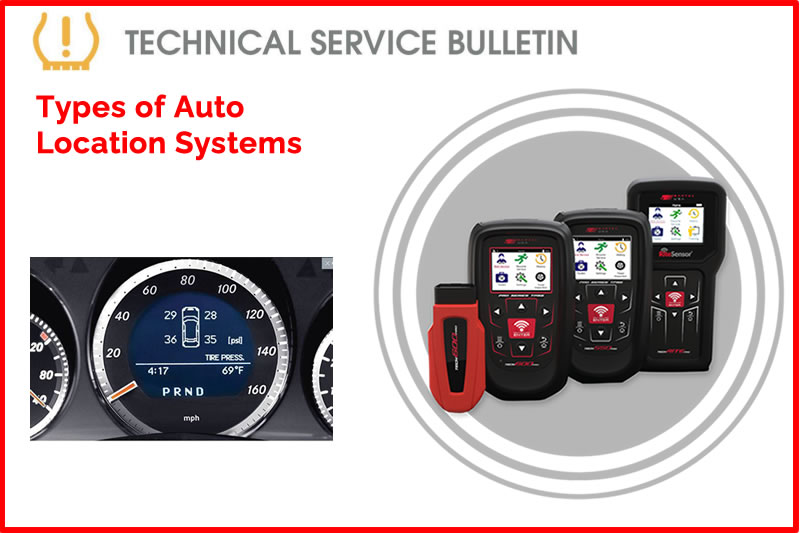
Overview:
TPMS come in various forms and differing levels of function. This TSB covers the basics of the “High Line” or pressure by location systems.
Pressure by Location:
There are several different ways that are used to associate one TPMS ID with a position. Most of these are both “auto-learn” – they learn the IDs associated with that vehicle automatically, and “auto-location” – they determine the location automatically. Note that if you use programmable sensors to Copy a set of IDs, the vehicle will behave differently to if you Create new IDs. The auto-learn only happens if the sensor IDs have changed. If the auto-location fails (because the programmable sensor doesn’t have the necessary technology), the vehicle may take a very long time to complain, or it may never complain, possibly depending on how many sensors were changed.
Wheel Arch Initiators:
Wheel arch actuators. These are Low Frequency (LF) coils, normally in the wheel arches, that the vehicle uses to activate one sensor at a time, and it uses this to work out which ID is in which wheel arch. Some vehicles do this when you turn on the ignition (for example TRW sensors), and some do it after 10 minutes of driving (Continental sensors). We call these vehicles High-Line.
Wireless Auto Location:
WAL (Wireless Auto Location) is a Mercedes technology licensed to Schrader, Huf and Alligator (possibly others). The TPMS has sensors which allow it to determine which direction it is rotating, and therefore which side of the vehicle it is on. The vehicle receiver is located at one end (for example in the rear bumper on the Opel Insignia), and it uses the RSSI (Received Signal Strength Indication) to determine if a particular ID is from the front or rear of the vehicle. It is believed that WAL cannot work on a tire mounted sensor (eg REDI eTIS).
LocSync®:
LocSync® is a Continental technology, where the TPMS sensor transmits at a particular angle (for example 3 o’clock on an analogue clock face). The vehicle ABS (Anti-lock Braking System) knows what positions the different wheels are at, and so when an ID is received, the TPMS system (over time) can work out which ID is associated with which wheel.
Phase Angle Locate:
PAL (Phase Angle Location) is a Schrader technology that is a variation of LocSync®. It will transmit at a varying angle (phase) after a fixed position (eg 3 o’clock), and it will transmit this phase in the UHF, and so the vehicle can use the ABS information in the same way as LocSync®.
TRW Hybrid:
0 LF initiator is like LocSync®
Toyota/Lexus:
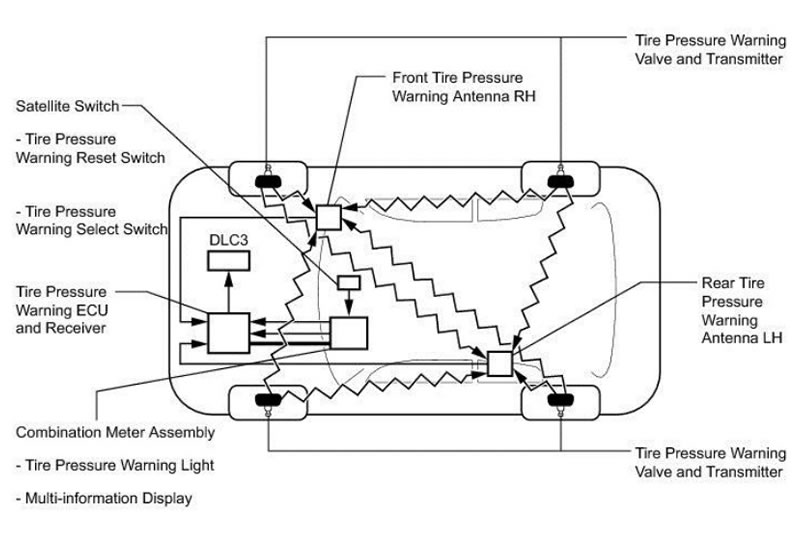
Toyota & Lexus have started to use a system using Pacific sensors where the sensors (probably) have a lower UHF power (maybe 6dB). They use two receivers, one at the front right, and the other at the rear left. They use the Received Signal Strength Indication from these to work out the positions of the sensors.
Find the Technical Service Bulletin at https://www.bartecusa.com/tpms-technical-service-bulletins.
Need help getting a Certificate Bundle? E-mail our sales team at sales@bartecusa.com, or call [855]877-9732. Need help updating your Bartec TPMS Tool? E-mail our Tech Support Team at help@bartecusa.com, or call [866]407-8767.
#Tech600Pro #Bartec365 #TPMS #TPMSTools #TPMSSensors #RiteSensor #TPMSSoftware #TPMSSupport #BartecTPMS #TheTrustedBrand
Other Articles
Three Weeks To Go Until SEMA 2026 & We Are Getting Closer
October 14, 2026
Discover What Is New With TPMS At The Sema Show 2026
October 13, 2026
Oktoberfest With Bartec TPMS At The SEMA Show 2026
October 12, 2026
Bartec TPMS To Highlight TPMS Diagnostics At 2026 SEMA Show
October 6, 2026
New TPMS Tool Update Technology At The SEMA Show 2026
October 5, 2026
One Month To Go Until The SEMA Show 2026
October 3, 2026
Bartec TPMS Heads to SEMA Show 2026
October 2, 2026
Take Tire Inspections To The Next Level With The Tread-Rite Tool
September 24, 2026
Three Months Until The SEMA Show 2026 In Las Vegas
August 3, 2026
We Are Excited To Welcome Lindsay Stead To Team Bartec
July 23, 2026
 Bartec USA LLC